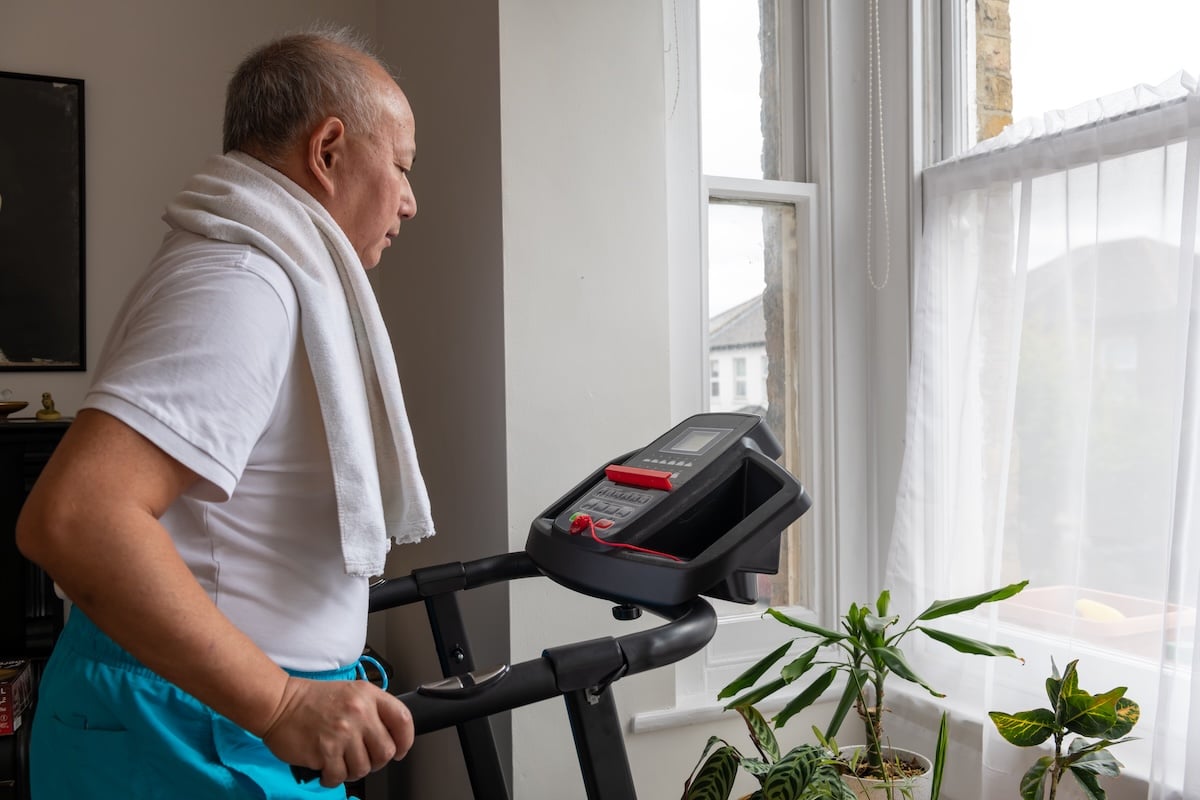
Starting and maintaining a fitness routine after 60 may feel intimidating, especially if you haven’t exercised consistently in years. The good news is that it’s never too late to begin.
For people over 60, a key goal of fitness should be functionality. You want to feel better overall and make daily activities easier, such as carrying groceries, climbing stairs, getting up from the floor, and traveling comfortably.
If you’re a Kendal at Home member, you can access Spiro100, an app-based on-demand fitness and wellness program featuring 100 full-length exercise and meditation sessions.
Note: It’s important to check in with your physician to make sure that you can safely work out, especially if you’ve had any recent surgeries, unstable medical conditions, unexplained chest pain, or balance issues.
Once you’ve done that, here’s how to get started.
Define Your Fitness Goals
Before starting any fitness routine, it’s important to ask yourself what your overall fitness goals are and what you need to do to realistically and safely achieve them.
Consider the following questions:
- What daily tasks feel harder than they used to? (stairs, getting up from low chairs, yard work)
- What do you want more of? (energy for travel, playing with grandkids, walking with friends)
- What health markers do you want to improve? (blood pressure, blood sugar, bone density, weight, sleep)
- How much time can you realistically commit to exercise each week?
- How active are you right now? (sedentary, lightly active, moderately active, very active)
Finding Exercises That Fit Your Goals
Once you have a clear idea of what your motivation is to begin exercising, it’s time to find the most effective exercises to achieve those goals.
For those seeking a more well-rounded fitness routine that targets multiple goals, the United Kingdom’s National Health Service recommends incorporating at least one exercise twice a week from each of the four pillars:
1. Strength (maintain muscle mass & bone density)
- Sit-to-Stand
- Mini squats
- Calf raises
- Sideways leg lift
2. Balance (reduce the risk of falling)
- Sideways walking
- Simple grapevine
- Heel-to-toe walk
- One-leg stand
- Step-ups
3. Flexibility and Mobility (reduce joint and back pain)
- Neck rotation — Helps to improve neck mobility and flexibility.
- Neck stretch — Good for loosening tight neck muscles.
- Sideways bend — Helps restore flexibility to the lower back.
- Calf stretch — Good for loosening tight calf muscles.
4. Cardiovascular Fitness (support heart & lung health)
- Brisk walking
- Running
- Swimming
- Riding a bike
Gather Your Supplies
Before attempting any exercise, make sure you have everything you need to get the most out of your workout without injury.
While some exercises require minimal equipment and can be done from the comfort of your own home, others may require specialized gym equipment, so it's important to plan ahead or find modified workouts that still meet your goals.
Regardless of whether you’re exercising outside, at a gym, or at home it’s important to invest in the following items:
- Supportive footwear - Look for footwear with good traction and cushioning to reduce the risk of falling and joint pain.
- Comfortable and moveable clothing - When exercising, choose clothing that is loose enough for easy movement but not so loose that it could cause you to trip.
- Light weights or resistance bands - If you’re looking to improve overall strength, items such as light weights and resistance bands help to stimulate muscle growth.
- An exercise mat or non-slip surface - The cushioning of an exercise mat is intended to prevent injury to the joints, minimize muscle strain, and alleviate back pain, especially during floor or standing exercises.
Develop a Starter Plan
Now that you have a list of workouts to choose from, it’s time to develop a daily or weekly workout routine that fits your needs and helps you stay consistent to achieve the best results.
If you’re using Spiro100, each class has been created, produced, led by nationally recognized senior wellness experts. It's an easy-to-use, on-demand program that allows you to customize your workout.
Here is an example of a workout plan offered by Spiro100 during its Active Aging Week celebration. The complete workout plan covers everything from strength training and cardio to flexibility and balance.
Week 1
- Monday: Flexibility & Balance - Includes 18 shibashi (standing) exercises adapted from tai chi and qigong moves. These low-impact exercises can help improve one’s flexibility, digestion, balance and sense of well-being. Due to their low impact, moves such as “Raising the Qi” and “Opening the Chest” can be performed every day for as long as you choose.
- Tuesday: Strength - Includes a variety of yoga poses designed to alleviate joint pain and improve strength such as Hero pose, a seated yoga pose done in a kneeling position, and Triangle pose, a standing yoga pose that helps strengthen multiple muscles in the body. Hold the pose for 20 to 45 seconds and repeat one to three times, depending on comfort level.
- Wednesday: Cardio - Dance for a period of 10 minutes and repeat three times for a 30-minute workout.
- Thursday: Flexibility & Balance - Repeat Monday’s workout.
- Friday: Strength - Repeat Tuesday’s workout.
- Saturday: Cardio - Briskly walk or cycle for 20 to 30 minutes.
- Sunday: Rest and Stretch - Take time to let your body fully recover.
Technique Tips
The right technique helps you get the most out of your workouts and avoid injury.
Start with a five‑minute warmup. This can be as simple as marching in place, swinging your arms, and practicing easy hip hinges.
Then build momentum by changing just one training variable at a time, such as weight, sets, reps, or length of time. This will help your progress feel steady, not overwhelming.
Tune in to your body and stop or modify your exercises if you notice sharp pain, dizziness, chest discomfort, or unusual shortness of breath.
Keep your breathing smooth during every lift. Don’t hold your breath, especially if you have high blood pressure. And make safety a habit.
Use a chair, wall, or countertop for balance when you need it and clear cords, rugs, and other trip hazards from your workout area so consistency can thrive.
How To Stay Motivated
Remaining motivated during workouts, particularly over a long period, can be one of the most challenging aspects of sticking to a fitness routine.
The first step to achieving this is to pinpoint the exact reason you want to work out and find ways to make it more enjoyable.
- Set specific and realistic goals, such as walking for 20 minutes three times a week or aiming to reach 10,000 steps a day.
- Keep a simple log of your workouts, whether big or small, to see progress over time—whether it’s more steps, stronger muscles, or more energy. Seeing ongoing improvement reinforces motivation and helps you feel capable.
- Sticking to the same routine can cause boredom. Studies have shown that varying exercises—such as walking, dancing, strength training, and swimming—keep workouts interesting and help you stay motivated.
- Exercise with friends. Working out with others increases motivation by providing accountability, encouragement, and enjoyment. Things like exercise groups, walking buddies, or classes help create social connections.
We’re Here To Help You Take Your First Next Step
However you’re starting, Kendal at Home turns your goals into daily momentum.
We focus on making aging what it should be: planned, supported, and entirely your own, in the home you love.
We do that through a combination of healthy living resources, care coordination and planning. Members can use Spiro100’s on‑demand classes to build strength, balance and cardio right at home.
And because health sticks when it’s social, our programs and member communities—from group classes to book clubs—make it easy to find accountability and friendships that keep you moving.
To learn more about how to live well at home, check out our guide to healthy aging.